AI agent assist is transforming the way people work. Instead of replacing humans, AI assistants sit side by side with your team, guiding them in real time, handling repetitive tasks, and surfacing exactly the information they need to do their best work. The result is faster responses, higher quality, and more confident employees.
Whether you run a contact center, a support desk, a sales team, or a knowledge-heavy operation, enhancing call centers with AI can dramatically boost productivity while improving the experience for both customers and employees.
AI agent assist not only helps employees respond faster, but it also simplifies the management of complex workflows. Teams can now rely on smart systems that organize tasks, highlight priorities, and deliver actionable insights in real time. For businesses looking to scale efficiently, high-performance computing solutions are often paired with AI to handle large volumes of data seamlessly.
Integrating technology like advanced supercomputer setups into your operations allows for faster analysis of customer trends, which in turn improves service quality and agent confidence. This combination ensures that your team isn’t just working harder—they’re working smarter.
Marketing strategies also benefit from AI-driven insights. Platforms such as Marketing for Customers can help you align your campaigns with customer behavior, ensuring every interaction is optimized. Using these tools alongside AI agent assist creates a cohesive system where technology and human expertise amplify each other.
For companies seeking to grow their digital presence, long-term marketing runners strategies offer guidance on maintaining consistent engagement while keeping costs under control. These strategies, when paired with AI-driven customer support, reduce friction and improve overall satisfaction.
Finally, financial planning and resource allocation can be streamlined using top financial resources online, which provide insights into budgeting, forecasting, and investing in technology. By leveraging AI agent assist with these resources, organizations can achieve more predictable outcomes, faster decision-making, and a more agile workforce.
Top 10 AI Agent Assist Platforms for Contact Centers in 2025
When it comes to transforming customer support, AI agent assist platforms are leading the way. These tools not only help agents respond faster but also provide real-time guidance, surface critical information, and automate repetitive tasks. Here’s a list of the top platforms that can boost contact center performance:
1. Bright Pattern
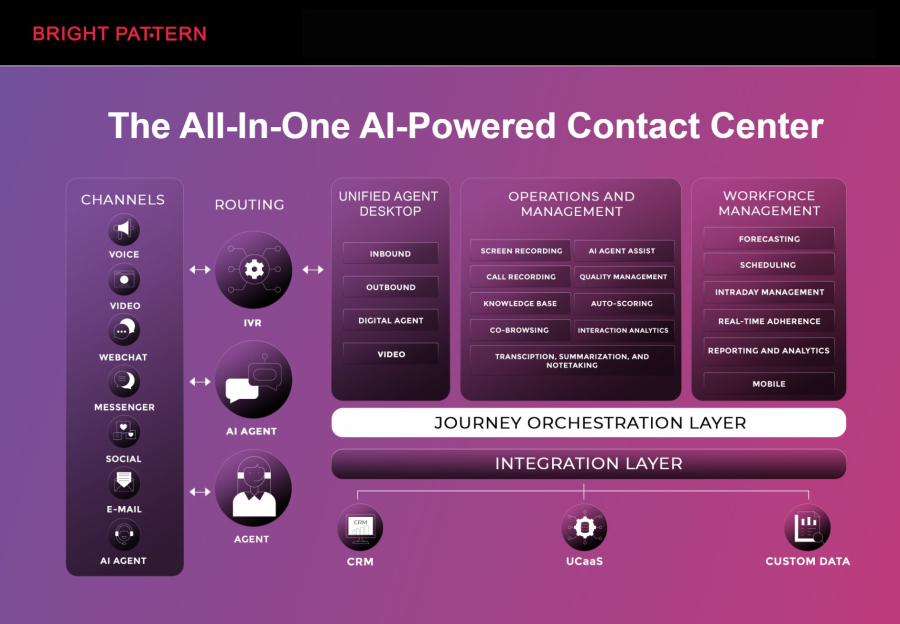
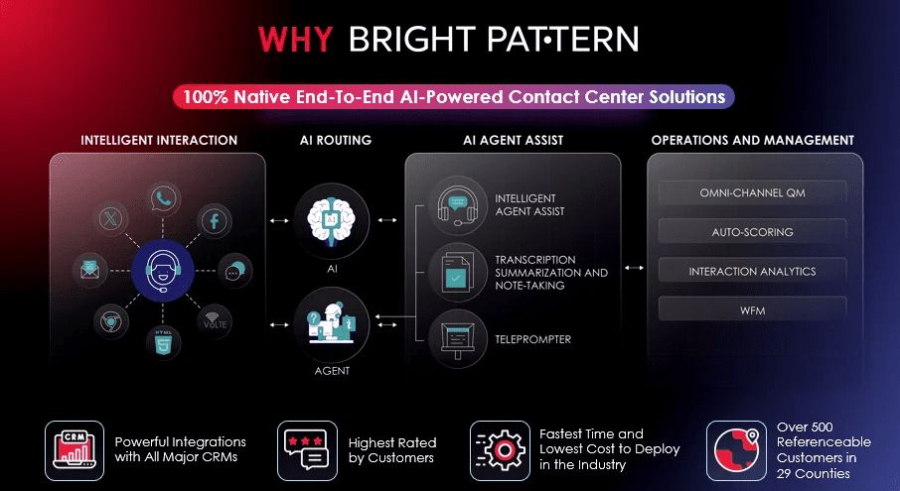
Bright Pattern is a leading AI-powered contact center solution that excels at enhancing agent productivity and customer satisfaction. Its AI agent assist features integrate seamlessly into existing workflows, offering real-time suggestions and intelligent automation.
Key features:
- Real-time guidance for agents during customer interactions
- Automated workflow management to reduce repetitive tasks
- Advanced analytics and reporting for performance optimization
- Omnichannel support, including voice, chat, email, and social
- Easy integration with CRM and enterprise tools
Benefits of using Bright Pattern:
- Faster response times for customers
- Improved agent confidence and efficiency
- Scalable solution suitable for small to large contact centers
- Personalized customer experiences using AI-driven insights
2. Genesys Cloud CX
Genesys Cloud CX offers AI-assisted workflows, predictive routing, and omnichannel support, helping agents deliver faster, more informed responses.
3. NICE inContact
NICE inContact features AI-driven interaction analytics and agent guidance, improving both operational efficiency and customer satisfaction.
4. Talkdesk CX Cloud
Talkdesk combines AI agent assist tools with intelligent automation to reduce call handling times and enhance service quality.
5. Five9 Intelligent Cloud Contact Center
Five9 uses AI to provide agents with real-time recommendations, automate routine tasks, and analyze customer sentiment.
6. 8x8 Contact Center
8x8 offers AI-powered agent assistance, voice recognition, and predictive analytics to streamline workflows and improve response accuracy.
7. RingCentral Contact Center
RingCentral integrates AI agent assist capabilities to deliver smarter routing, workflow automation, and actionable insights for agents.
8. Amazon Connect
Amazon Connect leverages machine learning to assist agents in real time, enabling faster issue resolution and personalized service.
9. Cisco Webex Contact Center
Cisco Webex includes AI-driven recommendations, automated processes, and reporting features that enhance agent efficiency and customer experience.
10. Zendesk Suite
Zendesk’s AI features assist agents by suggesting relevant articles, automating ticketing, and offering real-time guidance to improve resolution speed.
What Is AI Agent Assist?
AI agent assistrefers to intelligent software that supports human agents as they work, usually in real time. Instead of acting directly with customers on its own, the AI stays “in the loop,” providing suggestions, information, and automations that the human can accept, edit, or ignore.
At its core, AI agent assist combines several technologies:
- Natural language understandingto interpret customer questions, tickets, chats, calls, or emails.
- Large language models (LLMs)to generate drafts of responses, summaries, and next-best actions.
- Search and retrievalto pull relevant answers from knowledge bases, policies, documents, and past cases.
- Workflow automationto trigger routine actions like logging notes, updating systems, or creating follow-up tasks.
The human agent stays in control, making final decisions, adding nuance, and managing the relationship, while the AI handles the heavy lifting in the background.
How AI Agent Assist Works in Practice
Although implementations differ, most AI agent assist tools follow a similar pattern:
- Listen and analyze in real time.The AI monitors the conversation (chat, email, or transcribed voice) to infer intent, sentiment, and context.
- Retrieve knowledge.It searches relevant sources: FAQs, policy docs, product manuals, internal wikis, previous tickets, and more.
- Generate suggestions.It drafts a recommended reply, next step, or troubleshooting path tailored to the specific situation.
- Assist with actions.It can pre-fill forms, update records, suggest dispositions, or log notes automatically.
- Learn from feedback.Over time, it adapts based on what agents accept, edit, or ignore, improving both accuracy and usefulness.
This pattern makes every agent more informed, more consistent, and more efficient, without requiring them to memorize every policy or search through endless documents.
Key Benefits of AI Agent Assist
When thoughtfully designed and implemented, AI agent assist delivers powerful, measurable benefits across your organization.
1. Faster Response and Resolution Times
Instead of agents putting customers on hold while they search for answers, AI assist surfaces the most relevant information instantly. This leads to:
- Shorter handle times for both calls and chats.
- Faster email turnaround with AI-drafted responses.
- Reduced time spent navigating multiple systems and documents.
Customers feel the difference immediately: less waiting, smoother interactions, and quicker solutions.
2. Higher Quality and Consistency of Answers
Humans can forget policies, misinterpret complex rules, or simply have an off day. AI agent assist helps standardize quality by:
- Pulling the latest, approved guidance from central knowledge sources.
- Encouraging clear, complete responses through suggested templates and drafts.
- Reducing variation between new and seasoned agents.
Over time, this consistency builds trust with customers and protects your brand.
3. Shorter Training and Onboarding
New hires no longer need to memorize every scenario before going live. Instead, AI agent assist acts as a smart guide beside them, helping them:
- Find the right policy or script for unfamiliar situations.
- Follow step-by-step workflows for complex use cases.
- Learn by doing, with real-time hints and suggestions.
This significantly reduces ramp-up time and allows teams to scale faster without sacrificing quality.
4. Happier, More Confident Employees
Constantly searching for information, juggling multiple tools, or managing high volumes of repetitive questions is mentally draining. AI agent assist can:
- Offload repetitive, low-value tasks so agents focus on higher-value work.
- Reduce cognitive load by highlighting what matters most in each interaction.
- Boost confidence by ensuring agents have the right answer at their fingertips.
More confident agents deliver better experiences and are less likely to burn out or leave.
5. Stronger Compliance and Risk Management
For regulated industries or policy-heavy environments, AI agent assist can help agents stay compliant by:
- Suggesting mandatory disclosures and legally required language.
- Flagging potential policy violations during interactions.
- Standardizing documentation and call notes for auditing.
This reduces risk while keeping compliance from slowing agents down.
6. Always-On Operational Intelligence
Because AI agent assist analyzes interactions at scale, it can surface trends and insights like:
- Common reasons for contact and emerging issues.
- Knowledge gaps where documentation is missing or unclear.
- Opportunities to automate entire workflows or self-service flows.
These insights help leaders continuously refine processes, policies, and training.
Popular Use Cases for AI Agent Assist
AI agent assist is highly versatile. Here are some of the most impactful ways organizations use it today.
Customer Support and Contact Centers
- Real-time answer suggestions during chats and calls.
- Automatic call summaries and case notes after each interaction.
- Suggested dispositions, tags, and follow-up actions.
- Guided troubleshooting flows for technical issues.
Sales and Customer Success Teams
- Suggested replies during prospect and customer conversations.
- Automatic drafting of recap emails and proposals.
- Real-time surfacing of relevant case studies or product details.
- Guided playbooks for discovery calls, demos, and renewals.
IT and Internal Service Desks
- Fast retrieval of troubleshooting steps from technical documentation.
- AI-generated summaries of incident histories.
- Suggested knowledge articles to attach to tickets.
- Guided flows for common requests like access, resets, or provisioning.
HR and People Operations
- Assistance answering employee questions about benefits, policies, and procedures.
- Drafting responses for sensitive or complex HR inquiries.
- Summarizing employee cases and interactions for continuity.
Knowledge-Heavy Back-Office Functions
- Helping analysts quickly retrieve relevant documents and past cases.
- Summarizing long reports, contracts, or legal documents.
- Guiding staff through specialized workflows or checks.
What AI Agent Assist Can and Cannot Do
To get the best from AI agent assist, it helps to have clear expectations.
What AI Agent Assist Excels At
- Pattern recognition at scale.Spotting common requests, phrases, and intents across thousands of interactions.
- Information retrieval.Quickly finding relevant content in large, complex knowledge bases.
- Drafting and summarizing.Producing first drafts of responses or concise summaries of long text.
- Repetitive tasks.Logging notes, entering routine data, updating fields, and triggering workflows.
Where Humans Still Lead
- Nuanced judgment.Evaluating context, ethics, and subtle interpersonal dynamics.
- Building relationships.Showing empathy, adapting tone, and handling emotionally charged situations.
- Complex exception handling.Dealing with edge cases not covered by existing policies or data.
AI agent assist works best as a partner that amplifies human strengths rather than a full replacement for human judgment and empathy.
Essential Capabilities to Look For in AI Agent Assist
When evaluating AI agent assist solutions, focusing on the right capabilities ensures high adoption and long-term value.
- Accurate understanding of intent and context.The AI should correctly interpret what customers are asking and what agents are trying to achieve.
- Reliable knowledge retrieval.It must pull from the right, up-to-date sources and respect role-based access where needed.
- High-quality, controllable responses.Drafted replies should be clear, concise, and easy for agents to edit and approve.
- Real-time performance.Suggestions should appear fast enough to be genuinely helpful during live interactions.
- Configurable guardrails.Administrators should be able to define tone, policies, restricted topics, and escalation rules.
- Robust analytics.Clear reporting on usage, impact, and improvement areas is vital for continuous optimization.
- Seamless integration.The tool should fit into existing systems such as CRM, ticketing, contact center, or collaboration platforms.
Implementation Roadmap: From Idea to Live Agent Assist
A well-structured rollout makes the difference between a pilot that stalls and a program that transforms how your teams work. Here is a practical, phased approach.
Phase 1: Define Objectives and Success Metrics
- Clarify your primary goals (for example, reduce average handle time, improve first contact resolution, or cut onboarding time).
- Select a small number of metrics that matter and are easy to measure.
- Identify the initial team or use case that will benefit most.
Phase 2: Prepare Data and Knowledge
- Audit your current knowledge base and documentation.
- Retire outdated or conflicting content and fill critical gaps.
- Organize content so it is tagged and structured for AI-friendly retrieval.
Phase 3: Pilot With a Focused Group
- Launch AI agent assist with a well-defined group (for example, one support queue or one region).
- Gather feedback from agents daily or weekly.
- Refine prompts, guardrails, and knowledge sources based on real-world use.
Phase 4: Train, Communicate, and Support Adoption
- Show agents how AI assist helps them personally: less searching, fewer repetitive tasks, more time for complex work.
- Provide hands-on practice sessions using typical scenarios.
- Encourage agents to share examples of how AI saved them time or helped in a difficult case.
Phase 5: Scale and Optimize
- Roll out to additional teams and use cases once the pilot proves value.
- Continuously review analytics to identify improvement opportunities.
- Update knowledge and workflows regularly to keep the AI relevant.
Measuring ROI and Success of AI Agent Assist
To sustain investment and enthusiasm, it is important to quantify the impact of AI agent assist. Common metrics include efficiency, quality, and experience indicators.
Metric | What It Shows | Typical Impact |
Average Handle Time (AHT) | How long it takes agents to resolve interactions. | Often decreases as AI speeds up research and drafting. |
First Contact Resolution (FCR) | Percentage of issues resolved in the first interaction. | Usually improves when agents have better knowledge access. |
Agent Productivity | Interactions or tasks handled per agent per period. | Increases as repetitive work is automated. |
Customer Satisfaction (CSAT) | How customers rate their service experience. | Improves with faster, clearer, and more consistent answers. |
Agent Satisfaction | How employees feel about their tools and workload. | Often rises when tedious work is reduced. |
Training and Ramp Time | How long before new hires reach full productivity. | Decreases as AI provides real-time guidance. |
For financial ROI, many organizations estimate time saved per interaction and multiply it by interaction volume and fully loaded labor costs. Even modest efficiency gains can translate into substantial annual savings at scale.
Best Practices for Getting the Most From AI Agent Assist
AI agent assist delivers the best results when you pair strong technology with thoughtful change management and continuous improvement.
1. Start With High-Impact, Repeatable Use Cases
Identify scenarios that:
- Occur frequently.
- Follow relatively consistent patterns.
- Benefit from faster information retrieval and standardized responses.
These offer quick wins that build trust and momentum.
2. Involve Agents Early and Often
Agents are the people who will live with the tool every day. Engage them by:
- Inviting them to share pain points AI could help solve.
- Including them in pilot evaluations and feedback loops.
- Celebrating success stories where AI assist made a meaningful difference.
3. Keep Humans in Control
Position AI agent assist as a co-pilot, not a replacement. Make sure agents can:
- Easily edit or decline AI suggestions.
- Escalate complex cases without friction.
- Provide feedback when AI suggestions miss the mark.
4. Continuously Improve Knowledge and Prompts
AI agent assist is only as strong as the knowledge and guidance behind it. Invest in:
- Regularly updating policies, FAQs, and process documents.
- Refining prompts and instructions that drive AI behavior.
- Removing or revising content that frequently leads to edits or rework.
5. Set Clear Policies and Guardrails
Define how AI should be used and what is out of bounds. Clarify:
- Which types of cases are appropriate for AI assistance.
- Standards for tone, privacy, and data handling.
- Escalation paths for sensitive or high-risk situations.
The Future of Work With AI Agent Assist
AI agent assist is not a temporary trend; it is a foundational shift in how people access knowledge and get work done. As the technology matures, we can expect:
- More proactive assistance.AI will anticipate what agents need before they ask, based on context and historical patterns.
- Deeper workflow automation.Complex, multi-step processes will be orchestrated automatically, with humans overseeing exceptions.
- Richer coaching and development.AI will highlight strengths and improvement areas, supporting personalized training and coaching for every agent.
- Closer human–AI collaboration.Tools will feel more like collaborative teammates, adapting to individual work styles and preferences.
Organizations that embrace AI agent assist now gain a powerful advantage: more capable teams, more consistent service, and a work environment where people are empowered by technology rather than overwhelmed by it.
Conclusion: Turning Every Agent Into a Top Performer
AI agent assist empowers your teams to do their best work, every day. By giving agents instant access to the right knowledge, guiding them through complex situations, and handling routine tasks in the background, it turns average interactions into consistently excellent experiences.
When implemented thoughtfully, AI agent assist helps you serve customers faster, improve quality, reduce training time, and make work more rewarding for your people. It is not just about efficiency; it is about unlocking the full potential of every agent and every interaction.
The organizations that win in the coming years will be those that pair human talent with intelligent assistance. AI agent assist is one of the most practical, high-impact ways to start that journey today.
